

Acid-base balance:
A balancing act

Officially, it is the task of the acid-base balance to keep the pH value of the blood in a constant range. What is less popular, however, is that the connective tissue also needs a balance of metabolic acids.
What is acid-base balance?
Everything we eat, drink and inhale is converted into energy or the body’s own material. In biology, this process is called metabolism. Both acids and bases are formed in the process, although acid formation predominates. Amino acids are formed from proteins, fatty acids from fats and lactic acid from carbohydrates and sugars. In order to cushion an excess and build-up of these metabolic acids, it is important to permanently supply our body with “alkaline” nutrients. These are primarily so-called “alkaline electrolytes”, which are mainly found in vegetables and salads.
The frequently discussed “balanced acid-alkaline balance” is of enormous importance: on the one hand for the optimal functioning of all organs, and on the other for smooth metabolic processes in our body.

How does acidosis develop?
The lungs, skin and kidneys are important excretory organs for acids. For example, we exhale carbon dioxide with every breath we take. We can also excrete acids through the skin, our largest organ, via sweat. This process relieves the kidneys. However, we excrete the majority of acids via the kidneys (via urine).
A diet with too many acid-forming foods such as meat, sausage, dairy products, white flour products and sugar, insufficient exercise, stress, stimulants and/or excessive sport can lead to increased acid formation in the body. The excretory systems then work at full speed to keep the acid-base balance in equilibrium.

Consequences of hyperacidity
Tissue acidosis is relatively common in our affluent society. Although it is difficult to measure, it is clearly noticeable.
- Gout, rheumatism
- heartburn
- Arthritis, arthrosis
- Pain and diseases of the musculoskeletal system
- Increased fungal infections
- Osteoporosis
Mental illnesses are also increasingly associated with hyperacidity.

Tips against hyperacidity:
- Avoid acid-forming foods:
Foods that are metabolically broken down into acids, such as sugar, sweets, pasta, meat, white flour and alcohol, should be consumed infrequently. - Consume alkaline-rich foods:
Base-forming foods such as potatoes, vegetables, dried fruit, fruit and mineral waters should be part of your daily diet. - Drink a lot:
In addition to a balanced diet, make sure you drink enough fluids. Drinking plenty of fluids leads to increased acid excretion via the kidneys. - Detoxification of the body:
The liver and kidneys, as the most important excretory organs, are best strengthened with chlorophyll, which is mainly found in green plants (nettles, spinach, etc.), with bitter substances, which are often found in herbs such as wormwood, gentian root, andrographis or dandelion, but also with typical liver plants such as milk thistle and artichoke.
Exercise!
Exercise removes acidic waste products more quickly and carbonic acid is exhaled as carbon dioxide, which can reduce acid levels. Sweating also promotes acid excretion through the skin.Stress and anger make you acidic.
Stress increases the release of the hormones adrenaline and noradrenaline, which produce acids. Therefore, take breaks from work and don’t forget to relax.


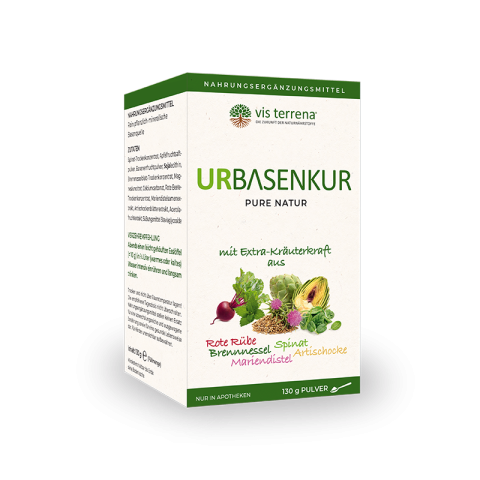
Targeted health improvement through advanced micronutrient supplements: with our products, this is no utopia, but a tried and tested reality.
This might also interest you
All about health